
Marble Flooring Installation
Marble Flooring Installation
Marble is one of the few flooring materials that changes the character of a room the moment it is installed. Its veining, depth, and natural variation cannot be replicated by manufactured tile, and for homeowners who want a floor that feels substantial and distinctive, marble delivers something else entirely. But marble is also less forgiving than ceramic or porcelain. It is softer, more porous, and more sensitive to moisture and staining. A successful marble floor depends as much on what happens beneath the tile—subfloor preparation, adhesive selection, and sealing—as it does on the stone itself.
At Robert’s Flooring Solutions & Design, our work with natural stone flooring installation and tile flooring installation has given us a clear view of where marble projects succeed and where they fail. A public customer review describes a marble installation in a penthouse with a five-year warranty on the flooring work , which reflects the kind of project we take on.
Why Marble Requires a Different Approach Than Ceramic or Porcelain
Ceramic and porcelain tile are manufactured to consistent standards. Marble is quarried, cut, and finished from natural stone, which means every piece varies in density, veining, and porosity. Those variations are part of marble’s appeal, but they also mean the installer cannot treat it like standard tile.
Marble is softer than porcelain. It scratches more easily, chips at edges, and can be etched by acidic substances like citrus juice, vinegar, and many household cleaners. It is also porous. Without proper sealing, liquids can penetrate the surface and leave stains that are difficult to remove. In a humid climate like Southwest Florida’s, moisture management matters even more, because trapped moisture beneath a marble floor can cause discoloration or adhesive failure .
The installation itself requires a rigid, flat substrate. Marble is heavy, and any flex or unevenness in the subfloor concentrates stress on the stone, leading to cracks over time . This is why professional marble installation always begins with a careful assessment of what is underneath the existing floor.


What a Proper Marble Flooring Installation Includes
A marble floor is not a single-day project, and the visible result depends on several invisible steps. The scope typically includes the following.
Subfloor assessment and preparation. The existing floor covering is removed, and the subfloor is inspected for flatness, stability, and moisture. Any flex, deflection, or unevenness must be corrected before marble goes down. A crack isolation membrane or leveling compound may be necessary. This is the most important stage and the one most often skipped in rushed installations.
Layout and dry-fitting. Marble varies from piece to piece. Before any adhesive is applied, the installer lays out the tile to plan the pattern, balance the color and veining, and minimize awkward cuts at edges and transitions. This step is especially important with marble because the natural variation is part of the design, not a defect.
Adhesive selection and installation. Marble requires a white, non-staining thinset or adhesive. Standard gray thinset can discolor light-colored marble, and moisture from some adhesives can migrate into the stone . The installer back-butters large pieces to ensure full coverage and avoid voids beneath the tile. The marble is set with spacers, checked for level and lippage, and allowed to cure fully.
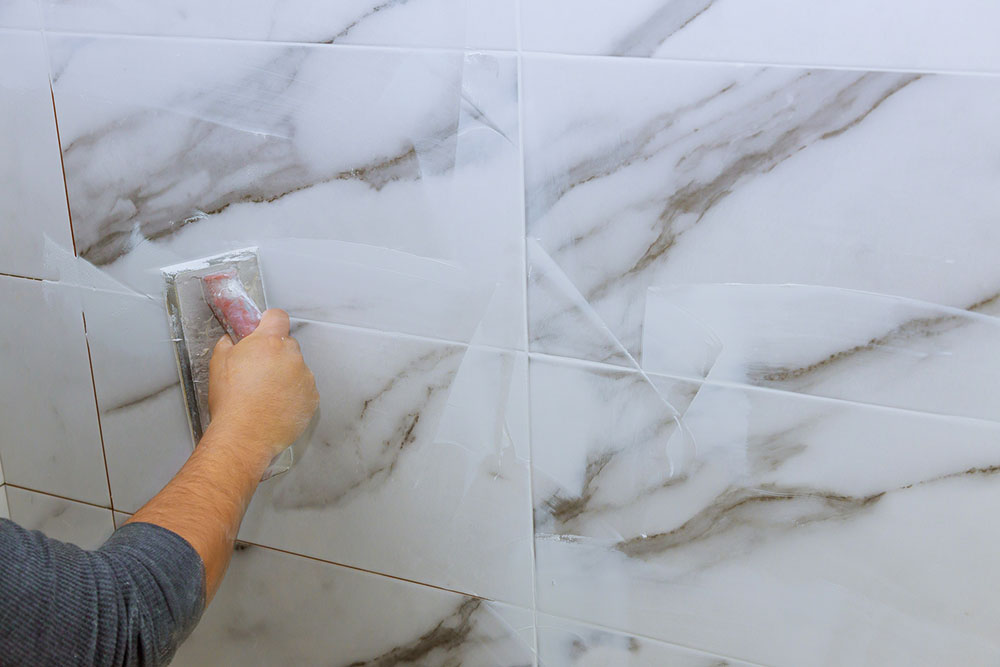
Grouting and sealing. After the adhesive cures, grout is applied. Marble is typically sealed before or after grouting depending on the sealer and the stone. A penetrating sealer protects the stone from stains without changing its appearance. In a humid climate, sealing is not optional; it is part of the installation.
If your project also includes bathroom remodeling or kitchen remodeling, coordinating the marble floor with the rest of the work matters. Marble is often used in bathrooms, where slip resistance and moisture protection are additional considerations.
Marble vs. Other Flooring Options
Homeowners considering marble often weigh it against porcelain tile, luxury vinyl, or engineered hardwood. Each has trade-offs.
Porcelain tile is more uniform, more scratch-resistant, and less expensive to install. It does not require sealing and handles moisture well. What it lacks is marble’s depth and natural variation. For homeowners who want the look of marble without the maintenance, marble-look porcelain is worth considering.
Luxury vinyl plank or tile is softer underfoot, warmer, and highly water-resistant. It is a practical choice for busy households and is easier to maintain than marble. It does not have the same visual weight or longevity.
Engineered hardwood offers warmth and a natural look but is not suitable for wet areas and requires more careful humidity control in Florida’s climate.
Marble sits at the high end of the spectrum: higher material cost, higher installation complexity, and higher maintenance requirements, but also a distinctive appearance and a lifespan measured in decades when properly installed and cared for. For homeowners who want stone in other areas of the home, granite countertops and quartz countertops offer similar permanence in kitchen and bath surfaces.
What Affects the Scope and Cost of a Marble Floor Project
Marble flooring is typically more expensive than ceramic or porcelain tile, both in materials and labor. The main factors that affect scope and cost include:
The marble itself. Marble is graded, and price varies widely by grade, color, and origin. Standard tiles in common colors are at the lower end; rare or book-matched slabs are significantly higher . Viewing the actual stone before purchase is essential because photos do not capture the full range of variation.
Subfloor condition. If the existing subfloor is flat, stable, and dry, preparation is more predictable. If there is deflection, moisture, or old adhesive to remove, the scope expands. Marble requires a more rigid substrate than standard tile, so this step cannot be skipped .
Tile size and format. Standard marble tiles are more manageable. Large-format marble or slabs require specialized handling, cutting equipment, and experience, which increases labor cost .
Sealing and finishing. Penetrating sealer is a standard part of the installation. Additional polishing or honing may be desired or necessary, which adds cost.
Removal and disposal. Tearing out an old floor produces debris that must be hauled away. The condition of the old installation affects how much labor the removal requires.
For a realistic understanding of cost for your specific project, an on-site assessment is the most reliable approach.
Caring for a Marble Floor in a Naples Home
Marble is not a low-maintenance floor, but it is manageable when the expectations are clear. Regular care includes dust mopping or sweeping to remove grit that can scratch the surface, damp mopping with a pH-neutral cleaner, and prompt cleanup of spills. Acidic cleaners, vinegar, lemon-based products, and abrasive pads should be avoided entirely.
Marble should be resealed periodically. The frequency depends on the stone and the sealer, but annual resealing is a reasonable baseline for most households. A simple water test—a few drops on the surface, watching whether they bead or absorb—can indicate whether the sealer is still working.
In a humid climate, ventilation and moisture control matter. Standing water should not be left on marble. Bathrooms and entryways where moisture is common should be monitored for changes in appearance or adhesion. If the floor does become stained or dull, professional cleaning, honing, or polishing can restore it.
Questions to Ask Before Hiring a Marble Installer
Marble is not the material to entrust to an installer who has only worked with ceramic tile. A few questions will help separate a qualified installer from one who is learning on your floor.
How do you assess the subfloor? A qualified installer should describe checking for flatness, deflection, and moisture, and explain what they do if the subfloor is not suitable. Marble requires a stiffer substrate than standard tile.
What adhesive and sealer do you use for marble? The answer should include a white, non-staining adhesive and a penetrating sealer appropriate for natural stone. Vague answers about “standard thinset” are a warning sign.
What is your experience with marble specifically? Ask to see completed marble projects, not just ceramic tile installations. Marble behaves differently during cutting, setting, and finishing.
Does the quote include sealing? Sealing is not an optional add-on for marble; it is part of a proper installation. Confirm that it is included.
What should I expect for maintenance? A good installer will be honest about resealing frequency, cleaning products to avoid, and the realities of living with a natural stone floor. For broader surface projects, the same coordination applies to shower tile installation and kitchen backsplash installation.
Related Services
In addition to tile flooring, we offer:
-
Flooring Installation for a broader look at all flooring options, including vinyl, hardwood, and carpet.
-
Kitchen Remodeling for full kitchen updates including backsplash and countertops.
-
Bathroom Remodeling for bathroom renovations including shower tile and fixtures.
-
Kitchen Backsplash Installation for tile backsplashes that match your floor.
-
Shower Tile Installation for shower walls and floors.
-
Countertop Installation for quartz, granite, and other surfaces.
-
Quartz Countertops for a durable, low-maintenance kitchen or bath surface.
-
Granite Countertops for a natural stone countertop option.
-
Custom Cabinetry for built-in storage and kitchen cabinets.
-
Cabinet Installation for new cabinetry in kitchens and baths.
-
Cabinet Refacing for updating existing cabinets without full replacement.

Yes! We design and install: Fireplaces • Outdoor Kitchens • Waterproof Cabinets
Frequently Asked Questions
How long does a marble floor installation take?
The timeline depends on the size of the area, the condition of the subfloor, and the complexity of the layout. A typical room may take several days of active work, plus cure time for adhesive and grout before the floor can be walked on. Sealing is typically done after the grout cures. Your installer can give a more specific estimate after assessing the space.
Is marble flooring suitable for bathrooms in Naples?
Marble can be used in bathrooms, but it requires careful attention to moisture and slip resistance. Polished marble is slippery when wet; a honed or tumbled finish offers more grip. The subfloor must be properly prepared, and the marble must be sealed. In a humid climate, ventilation and prompt cleanup of standing water are important.
Does marble flooring require sealing?
Yes. Marble is porous and will absorb liquids if left unprotected. A penetrating sealer is applied during installation and should be reapplied periodically. Sealing does not make marble stain-proof, but it gives you time to clean up spills before they penetrate the surface.
Can marble be installed over existing tile?
In some cases, yes, if the existing tile is sound, flat, and well-bonded to a rigid substrate. However, the added height can create problems at transitions, doorways, and cabinets. Removing the old floor is often the more reliable approach because it allows the installer to inspect and prepare the subfloor properly. Ask your installer which approach makes sense for your situation.
How much does marble flooring installation cost in Naples?
Costs vary widely based on the marble selected, the size of the area, subfloor condition, and the complexity of the installation. Statewide and regional cost guides show broad ranges, but they are not a substitute for a local quote. For an accurate understanding of cost for your specific project, an on-site assessment is the reliable path.

Ready for a New Look?
- Flooring Sales & Installation • Restretch • Repair
- Carpet • Stone • Tile • Porcelain • Marble • Vinyl • Hardwood
- Luxury Vinyl Plank (LVP) Waterproof Flooring
- Remodeling • Renovation • Restoration

ALL MAJOR CREDIT CARDS ACCEPTED
PROUDLY REPRESENTING THESE FINE MANUFACTURERS


