
Granite Countertops in Cape Coral Florida
Granite Countertops in Cape Coral Florida, FL
If you are planning a kitchen or bathroom update in Cape Coral Florida, granite countertops are probably on your shortlist. The material is durable, heat-resistant, and visually distinctive — no two slabs look alike. But choosing granite is only half the decision. The other half is finding a local company that can template, fabricate, and install it correctly, and coordinating that work with the rest of your project. This page explains how granite countertops work in a Cape Coral Florida home, what the installation process involves, and how to move forward with a local provider.
At Robert’s Flooring Solutions & Design, we have served Cape Coral Florida-area homeowners since 2011 with residential flooring installation and kitchen remodeling projects. Countertops are often part of the larger surface and cabinetry work we coordinate.
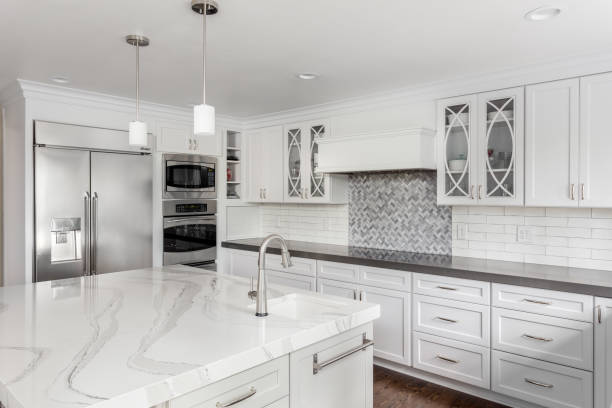
Why Cape Coral Florida Homeowners Choose Granite Countertops
Granite is a natural stone formed deep underground under intense heat and pressure. Each slab carries its own mineral pattern, color variation, and movement — qualities that manufactured surfaces cannot fully replicate. For Cape Coral Florida homeowners who want a countertop that feels substantial and one-of-a-kind, granite delivers something engineered materials cannot.
It also performs well in the local climate and lifestyle. Southwest Florida homes often blend indoor and outdoor living, and granite handles humidity and temperature shifts without warping or delaminating. It resists heat, so a hot pan set down briefly will not scorch the surface. It resists scratches from everyday use, though cutting directly on granite is still not recommended. And when properly sealed and maintained, granite retains its finish for decades.
For homeowners updating a kitchen in Cape Coral Florida or nearby neighborhoods, granite is also a material that appraisers and real estate professionals recognize as a durable upgrade — relevant whether you plan to stay in the home or sell it eventually.


How Granite Countertop Installation Works in Cape Coral Florida
Granite installation is not a do-it-yourself project. Slabs are heavy (a large slab can exceed 500 pounds), brittle during transport, and require precise cutting with specialized tools. Understanding the process helps you know what to expect and what questions to ask before work begins.
The process typically follows these stages:
Templating. After you select your slab and your cabinets are installed and level, a template is created to capture the exact dimensions of your countertop area, including sink cutouts, cooktop openings, and wall contours. Accuracy at this stage prevents costly problems later.
Fabrication. The slab is cut to match the template using water-cooled saws with diamond blades. Edge profiles (eased, bullnose, ogee, and others) are shaped at this stage, and sink cutouts are made. The quality of the fabrication determines how well the seams align and how clean the finished edges look.
Installation. The installer dry-fits the pieces, applies adhesive, sets the granite in place, and joins seams with color-matched epoxy. Seams are a normal part of granite installation; the goal is to make them as tight and inconspicuous as possible. After the countertop is set, a penetrating sealer is applied to protect the stone.
If your Cape Coral Florida project also includes kitchen backsplash tile or custom cabinetry, coordinating those trades with countertop installation matters. New cabinets should be fully installed and level before templating. Backsplash work typically happens after the countertop is in place.
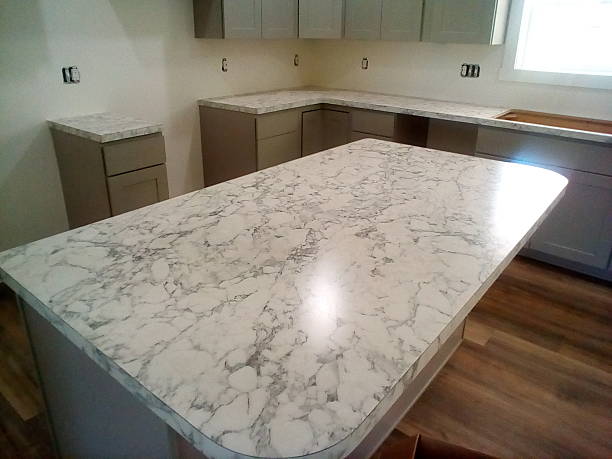
Granite vs. Quartz for Cape Coral Florida Homes
Many Cape Coral Florida homeowners begin their countertop search by comparing granite and quartz. Both are excellent choices, but they suit different priorities.
Granite is a natural stone. Each slab is different, which is either its greatest appeal or a drawback depending on your preferences. It requires periodic sealing (typically once a year, though some stones are denser than others) and can be etched by acidic substances like citrus juice or vinegar if spills are left sitting. It handles heat extremely well.
Quartz is an engineered surface made from ground quartz combined with resins and pigments. It is non-porous, so it does not require sealing and resists staining more readily than granite. It offers consistent color and pattern across slabs, which helps when you need to match multiple pieces. However, quartz is less heat-resistant than granite, and prolonged sun exposure in bright Florida rooms can cause some quartz colors to fade over time.
For homeowners who value the unique character of natural stone and do not mind annual sealing, granite is often the preferred choice. For those who want minimal maintenance and consistent appearance, quartz countertops may be a better fit.
What Affects the Cost of Granite Countertops in Cape Coral Florida
The price of a granite countertop project varies based on several factors. Across the Cape Coral Florida and Southwest Florida market, installed granite typically ranges from roughly $80 to $180 per square foot depending on the stone tier, with basic granites at the lower end and exotic or premium slabs at the higher end. These figures are general market context; your actual quote will depend on your specific project.
The main factors that influence cost include:
The slab itself. Granite is priced by the slab, not just by square footage. You typically purchase the full slab even if your project does not use every square foot. Rarer colors and patterns cost more. Viewing slabs in person before committing is worth the effort, because photos do not capture the full range of variation.
Edge profile. A standard eased edge is usually included in a base quote. Decorative edges like bullnose, ogee, or waterfall edges add fabrication time and cost.
Sink and cutout requirements. An undermount sink requires polishing the inside edge of the cutout, which adds labor. A drop-in sink needs a simpler cutout. Cooktop cutouts, faucet holes, and electrical outlet cutouts each add to the fabrication scope.
Removal and disposal of old countertops. If you are replacing existing surfaces, tear-out and disposal are typically add-on costs. Plumbing disconnect and reconnect may also be necessary and should be confirmed with your installer.
Backsplash. A short 4-inch backsplash made from the countertop material is a common addition. A full-height backsplash using tile is a separate scope.
The most reliable way to understand cost for your specific Cape Coral Florida kitchen is to request a quote after measurements are taken.
Caring for Granite in a Cape Coral Florida Home
Granite is low-maintenance compared to many surfaces, but it is not maintenance-free. The stone is porous, and without a sealer, liquids can penetrate and leave stains. Most granite is sealed at installation, and resealing once a year is a reasonable schedule for most households.
A simple water test can tell you whether your granite needs sealing. Place a few drops of water on the surface and wait 10 to 15 minutes. If the water beads up, the sealer is still working. If it absorbs into the stone and darkens the area, it is time to reseal.
For daily cleaning, use a soft cloth or sponge with warm water and a mild dish soap. Avoid acidic cleaners (vinegar, lemon-based products), abrasive powders, and ammonia-based glass cleaners, which can dull the finish or etch the stone over time. Wipe up spills promptly, especially oil, wine, and citrus juices.
If your granite does become stained or the finish looks dull, a professional cleaning and resealing service can restore it.
Coordinating Countertops with Flooring and Remodeling in Cape Coral Florida
One advantage of working with a company that handles multiple surface types is coordination. If your Cape Coral Florida project includes new flooring installation alongside countertop work, scheduling both through the same contractor reduces the chance of delays or miscommunication between trades.
For larger projects, bathroom remodeling often involves vanity countertops, shower tile installation, and floor tile. Granite is a common choice for bathroom vanities because it holds up well to moisture and daily use.
If you are updating cabinets as part of your project, cabinet refacing can be a cost-effective alternative to full replacement when the cabinet boxes are in good condition. Countertop replacement often pairs naturally with refacing, since both change the visual character of the kitchen without the disruption of a full gut renovation.
Related Services
In addition to countertop installation, we offer:
-
Custom Cabinetry for new cabinet design and fabrication.
-
Cabinet Installation for installing new cabinets.
-
Cabinet Refacing for updating existing cabinets.
-
Kitchen Remodeling for full kitchen updates.
-
Bathroom Remodeling for bathroom renovations.
Yes! We design and install: Fireplaces • Outdoor Kitchens • Waterproof Cabinets
Frequently Asked Questions
How long does granite countertop installation take in Cape Coral Florida?
The installation itself typically takes one to three days for most kitchens, but the full timeline includes templating, fabrication, and scheduling. From template to completed installation, two to three weeks is a common range, though this varies by fabricator workload and stone availability. Your installer can give you a more specific timeline for your project.
Do I need to seal granite countertops?
Yes, most granite benefits from sealing at installation and resealing periodically. Some granites are denser and require less frequent sealing than others. A water test will tell you when resealing is needed. Sealing does not make granite waterproof, but it gives you more time to wipe up spills before they stain.
Can granite be installed over my existing countertops?
In some cases, granite can be installed over existing countertops if the substrate is sound and the added height does not create problems with cabinet fit, appliances, or backsplash. However, this is not always advisable. Removing old countertops is the standard approach and allows the installer to inspect the cabinet tops and address any issues. Ask your installer which approach makes sense for your situation.
Is granite safe for kitchen use?
Granite is a food-safe surface when properly sealed and cleaned. Some granite contains trace amounts of naturally occurring minerals, but reputable stone suppliers and fabricators can address any concerns about specific slabs. If you have specific health concerns, ask your fabricator about the stone’s composition and any testing documentation available.
What is the difference between granite slab and granite tile?
Granite slab creates a seamless surface with no grout lines in the main counter area. Granite tile is made from thinner pieces of granite and installed with grout lines, similar to ceramic or porcelain tile. Tile is less expensive than slab but has a different appearance and requires sealing the grout as well as the stone.

Ready for a New Look?
- Flooring Sales & Installation • Restretch • Repair
- Carpet • Stone • Tile • Porcelain • Marble • Vinyl • Hardwood
- Luxury Vinyl Plank (LVP) Waterproof Flooring
- Remodeling • Renovation • Restoration

ALL MAJOR CREDIT CARDS ACCEPTED
PROUDLY REPRESENTING THESE FINE MANUFACTURERS


