
Granite Countertops
Granite Countertops in Naples, Florida
Granite remains one of the most requested surfaces for Southwest Florida kitchens and bathrooms, and for good reason. It is a natural stone that handles heat, resists scratches, and brings a level of visual depth that manufactured materials cannot replicate. If you are planning a kitchen update or building a new home in the Naples area, understanding how granite is sourced, fabricated, and installed will help you make a decision you will be happy with for years.
At Robert’s Flooring Solutions & Design, we have been helping Naples-area homeowners with surface and flooring projects since 2011 . Our work spans residential flooring installation and kitchen remodeling, which means we understand how countertops fit into the larger picture of a functional, cohesive space.
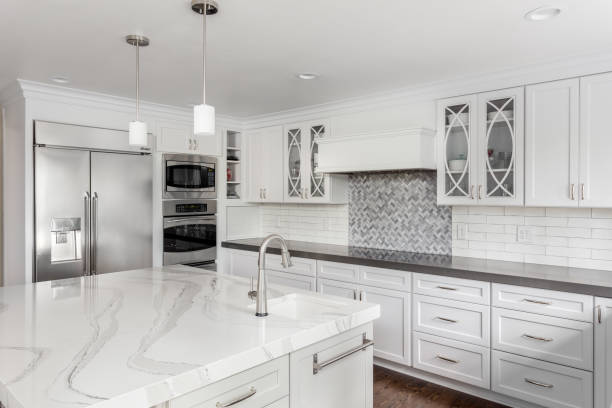
Why Homeowners in Naples Choose Granite
Granite is an igneous rock formed underground under intense heat and pressure. Each slab is unique, with mineral patterns and color variations that no two slabs share. For homeowners who want a countertop that feels substantial and one-of-a-kind, granite delivers something that engineered surfaces cannot.
Beyond appearance, granite performs well in busy households. It is resistant to heat, so setting a hot pan down without a trivet will not scorch the surface. It resists scratches from everyday use, though cutting directly on granite is still not recommended. And unlike some materials that fade or wear through, granite retains its finish for decades when properly sealed and maintained .
In Southwest Florida, where homes often blend indoor and outdoor living, granite’s ability to handle humidity and temperature shifts without warping or delaminating is another practical advantage. It is also a material that appraisers and real estate professionals recognize as a durable upgrade, which matters whether you are planning to stay in your home or sell it eventually.


How Granite Countertops Are Installed
Granite installation is not a do-it-yourself project. The slabs are heavy (a large slab can exceed 500 pounds), brittle during transport, and require precise cutting with specialized tools . Understanding the process helps you know what to expect and what questions to ask before work begins.
The process typically follows these stages:
Templating. After you select your slab and your cabinets are installed and level, a template is created to capture the exact dimensions of your countertop area, including sink cutouts, cooktop openings, and wall contours. Some fabricators use digital templating; others use physical templates. Accuracy at this stage prevents costly problems later.
Fabrication. The slab is cut to match the template using water-cooled saws with diamond blades. Edge profiles (eased, bullnose, ogee, etc.) are shaped at this stage. Sink cutouts are also made during fabrication. The quality of the fabrication determines how well the seams align and how clean the finished edges look.
Installation. The fabricator or installer dry-fits the pieces, applies adhesive, sets the granite in place, and joins seams with color-matched epoxy. Seams are a normal part of granite installation; the goal is to make them as tight and inconspicuous as possible. After the countertop is set, a penetrating sealer is applied to protect the stone .
If you are also replacing kitchen backsplash tile or updating custom cabinetry, coordinating those trades with countertop installation matters. New cabinets should be fully installed and level before templating. Backsplash work typically happens after the countertop is in place.
Granite vs. Quartz: A Practical Comparison for Naples Homes
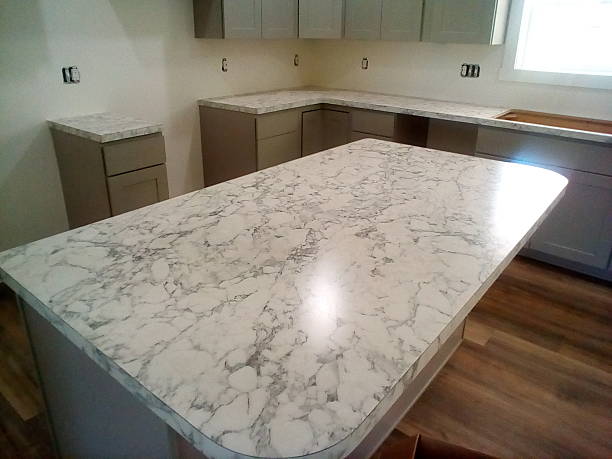
Many homeowners in Naples begin their countertop search by comparing granite and quartz. Both are excellent choices, but they suit different priorities.
Granite is a natural stone. Each slab is different, which is either its greatest appeal or a drawback depending on your preferences. It requires periodic sealing (typically once a year, though some stones are denser than others) and can be etched by acidic substances like citrus juice or vinegar if spills are left sitting . It handles heat extremely well.
Quartz is an engineered surface made from ground quartz combined with resins and pigments. It is non-porous, so it does not require sealing and resists staining more readily than granite. It offers consistent color and pattern across slabs, which is helpful when you need to match multiple pieces. However, quartz is less heat-resistant than granite, and prolonged sun exposure in bright Florida rooms can cause some quartz colors to fade over time.
For homeowners who value the unique character of natural stone and do not mind annual sealing, granite is often the preferred choice. For those who want minimal maintenance and consistent appearance, quartz countertops may be a better fit.
What Affects the Cost of Granite Countertops in Naples
The price of a granite countertop project varies based on several factors. In the Naples market, installed granite typically ranges from roughly $80 to $180 per square foot depending on the stone tier, with basic granites at the lower end and exotic or premium slabs at the higher end . These figures are provided as general market context; your actual quote will depend on your specific project.
The main factors that influence cost include:
The slab itself. Granite is priced by the slab, not just by square footage. You typically purchase the full slab even if your project does not use every square foot. Rarer colors and patterns cost more. Viewing slabs in person before committing is worth the effort, because photos do not capture the full range of variation.
Edge profile. A standard eased edge is usually included in a base quote. Decorative edges like bullnose, ogee, or waterfall edges add fabrication time and cost .
Sink and cutout requirements. An undermount sink requires polishing the inside edge of the cutout, which adds labor. A drop-in sink needs a simpler cutout. Cooktop cutouts, faucet holes, and electrical outlet cutouts each add to the fabrication scope.
Removal and disposal of old countertops. If you are replacing existing surfaces, tear-out and disposal are typically add-on costs. Plumbing disconnect and reconnect may also be necessary and should be confirmed with your installer.
Backsplash. A short 4-inch backsplash made from the countertop material is a common addition. A full-height backsplash using tile is a separate scope.
The most reliable way to understand cost for your specific kitchen is to request a quote after measurements are taken.
Caring for Granite in a Southwest Florida Home
Granite is low-maintenance compared to many surfaces, but it is not maintenance-free. The stone is porous, and without a sealer, liquids can penetrate and leave stains. Most granite is sealed at installation, and resealing once a year is a reasonable schedule for most households .
A simple water test can tell you whether your granite needs sealing. Place a few drops of water on the surface and wait 10 to 15 minutes. If the water beads up, the sealer is still working. If it absorbs into the stone and darkens the area, it is time to reseal .
For daily cleaning, use a soft cloth or sponge with warm water and a mild dish soap. Avoid acidic cleaners (vinegar, lemon-based products), abrasive powders, and ammonia-based glass cleaners, which can dull the finish or etch the stone over time. Wipe up spills promptly, especially oil, wine, and citrus juices.
If your granite does become stained or the finish looks dull, a professional cleaning and resealing service can restore it.
Coordinating Countertops with Flooring and Remodeling
One advantage of working with a company that handles multiple surface types is coordination. If your project includes new flooring installation alongside countertop work, scheduling both through the same contractor reduces the chance of delays or miscommunication between trades.
For larger projects, bathroom remodeling often involves vanity countertops, shower tile installation, and floor tile. Granite is a common choice for bathroom vanities because it holds up well to moisture and daily use.
If you are updating cabinets as part of your project, cabinet refacing can be a cost-effective alternative to full replacement when the cabinet boxes are in good condition. Countertop replacement often pairs naturally with refacing, since both change the visual character of the kitchen without the disruption of a full gut renovation.
Related Services
In addition to countertop installation, we offer:
-
Custom Cabinetry for new cabinet design and fabrication.
-
Cabinet Installation for installing new cabinets.
-
Cabinet Refacing for updating existing cabinets.
-
Kitchen Remodeling for full kitchen updates.
-
Bathroom Remodeling for bathroom renovations.
Yes! We design and install: Fireplaces • Outdoor Kitchens • Waterproof Cabinets
Frequently Asked Questions
How long does granite countertop installation take?
The installation itself typically takes one to three days for most kitchens, but the full timeline includes templating, fabrication, and scheduling. From template to completed installation, two to three weeks is a common range, though this varies by fabricator workload and stone availability. Your installer can give you a more specific timeline for your project .
Do I need to seal granite countertops?
Yes, most granite benefits from sealing at installation and resealing periodically. Some granites are denser and require less frequent sealing than others. A water test will tell you when resealing is needed. Sealing does not make granite waterproof, but it gives you more time to wipe up spills before they stain .
Can granite be installed over my existing countertops?
In some cases, granite can be installed over existing countertops if the substrate is sound and the added height does not create problems with cabinet fit, appliances, or backsplash. However, this is not always advisable. Removing old countertops is the standard approach and allows the installer to inspect the cabinet tops and address any issues. Ask your installer which approach makes sense for your situation.
Is granite safe for kitchen use?
Granite is a food-safe surface when properly sealed and cleaned. Some granite contains trace amounts of naturally occurring minerals, but reputable stone suppliers and fabricators can address any concerns about specific slabs. If you have specific health concerns, ask your fabricator about the stone’s composition and any testing documentation available.
What is the difference between granite slab and granite tile?
Granite slab creates a seamless surface with no grout lines in the main counter area. Granite tile is made from thinner pieces of granite and installed with grout lines, similar to ceramic or porcelain tile. Tile is less expensive than slab but has a different appearance and requires sealing the grout as well as the stone .

Ready for a New Look?
- Flooring Sales & Installation • Restretch • Repair
- Carpet • Stone • Tile • Porcelain • Marble • Vinyl • Hardwood
- Luxury Vinyl Plank (LVP) Waterproof Flooring
- Remodeling • Renovation • Restoration

ALL MAJOR CREDIT CARDS ACCEPTED
PROUDLY REPRESENTING THESE FINE MANUFACTURERS


